Showing posts with label literacy. Show all posts

Monday, 3 April 2017

Blackhen Education's Top Easter Reads


During the school holidays, you deserve to be relaxing and putting your feet up, and what better way to do that than with a good book? Research suggests that children who read regularly are more imaginative, and it is said to improve your writing skills too. However, finding a book can be tricky; there’s millions out there. So we’ve compiled a list of some recommended reads to help you pick the perfect book for you.


The Day the Crayons Quit by Drew Daywalt
(Ages 5-7)
Duncan wants to colour, but when he opens the box he finds that all his crayons have gone, and there is a note saying ‘we quit’. Will Duncan get them back?


To Wee or Not to Wee by Pamela Butchart
(Ages 6-8)
Izzy is asked to tell her friends some SUPER hilarious and scary stories. Izzy knows how funny Shakespeare was, so exaggerates some of his best stories in this funny book.

The Huge Bag of Worries by Virginia Ironside
Ages 6-8
Jenny has a lot of worries. So many worries in fact, that she has to carry them around in her big blue bag. The bag goes everywhere with her. Finally, Jenny decides they will have to go, but will anyone help her?

The Parent Agency by David Badiel
(Ages 9-11)
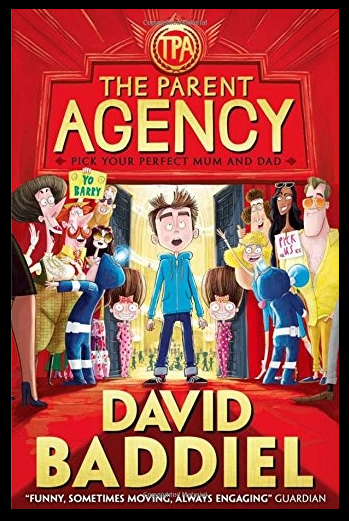
Barry hates his parents and wishes he had better ones. But far away, there’s a world where children get to choose who their parents are…


Murder Most Unladylike by Robin Stevens
(Ages 9-11)
Daisy and Hazel set up their own secret detective agency at school. It’s all quite quiet, until they find their science teacher lying dead in the gym. Will they catch the culprit before they strike again?


Holes by Louis Sachar
(Ages 10-13)
Stanley is cursed. At least that’s how he feels when he’s accused of a crime and then sent to Camp Green Lake instead of prison. Camp Green Lake is not green and there’s no lake. Each day Stanley has to dig a hole, and it feels more like prison than he could have imagined. Then, one day he finds something that changes everything…

Once by Morris Gleitzman
(Ages 11-13)
This book tells the story of Felix, a little Jewish boy living in Poland during World War 2. Felix escapes from the orphanage where he lives to try and find his parents and save them from the Nazis. If you enjoy this book there are five more books in the series.

The Knife of Never Letting Go by Patrick Ness
(Ages 13+)
The first book in this trilogy, The Knife of Never Letting Go tells the tale of Todd, the only boy left in Prentisstown, and in one month he will become a man like the rest of the town. But this is no ordinary town, as here, no thoughts are private. Todd realises secrets are being kept from him, and he’s left with no choice but to run…


Noughts and Crosses by Malorie Blackman
(Ages 13+)
Sephy is a Cross. Callum is a Nought. The dark-skinned crosses are the ruling race, whilst the white skinned Noughts are members of the underclass, who were once enslaved by the Crosses. The Noughts become increasingly frustrated with their social position, and war erupts. But amidst this a romance builds between Sephy and Callum.


Other Recommended Reads:
Rosie Revere, Engineer- Andrea Beaty (5-7)
The Thirteen Story Tree House- Andy Griffiths (6-8)
Oh The Places You’ll Go-  Dr Seuss (5-9)
Beetle Boy- M.G Leonard (8-11)
My Brother is a Superhero- David Solomans (8-11)
The Lion, the witch and the Wardrobe- C.S. Lewis (8-11)
An Eagle in the Snow- Michael Morpurgo (9-12)
Tom Gates Series- Liz Pinchon (9-12)
Ketchup Clouds- Annabel Pitcher (11-14)
One- Sarah Crossman (14+)
Broken Beautiful Things- Sara Bernard (14+)

This post was written by Lucy Taylor (IGCSE English tutor at Blackhen Education).


Friday, 2 October 2015

4 Great Ways To Connect Through Storytelling.


I really love stories. And they are way more powerful than we realise. Our children’s ability to talk about the past and future is linked to success in school, learning to read & write, and to social success. And we all love a good story, right?

Last night I read The Little Red Hen to my four year old daughter for the first time. I picked it because I remember loving it as child myself & it really is a great story for imparting values around work ethic & consequences. Stories have many purposes: to entertain, to teach, to transmit values, to show ourselves in a good light. You don’t have to confine yourself to story books either. Here are some ideas for weaving stories into the fabric of your everyday life:

#1 Tell your children stories from when you were little.
They really love this! Telling your own stories is such a wonderful way of connecting with your children and showing them your understanding of the challenges of childhood. It’s such a relief to hear it happened to someone else too- no matter what age you are!

On a train one day, I overheard a mother tell her son a story of something embarrassing that happened to her as a child- she was at the swimming pool from school & needed to go to the toilet but was too shy to tell the teacher, so she went to the toilet in the pool and the whole place had to be evacuated! I loved her for sharing this publicly and it worked a treat to diffuse her son’s upset when the picture he was colouring in did not go his way. You should have seen the attention he paid her- he was hooked on every word. Don't panic, your stories don’t have to be this dramatic- see # 4 below.

#2 Write a letter
We live about 3 hours away from my parents by car & they aren’t online. I feel sad about the impact the distance has on their relationship with my little girl. One day, I decided to write to my father & ask him to send her stories from when he was a child. I also put in a stamped addressed envelope to make it even easier. A few days later, a letter arrived for her with a story called Grandad Bernard’s Trip to Tipp to Sell the Geese – it was so vivid and lovely and a precious keepsake for her. 

#3 Make it up as you go along…
I came across a lovely idea in a Donna Leon detective novel recently where at dinner time, one of the family threw out a storyline & the others took it in turn to run with it. You could have great fun with this especially for older children & have wild imaginings over dinner.

Here’s an example from The Golden Egg by Donna Leon: …. Chiara set her water glass down with a thump & said, ‘They all lived happily ever after’. ‘Clorinda’s eyes met Giuseppe’s, & together they gazed happily down at the baby’, Paola said immediately in a voice she pumped full of emotion.  I love the way Chiara begins the story with what we would think of as an ending. You’ll have to read the book to find out where they take the story- it’s worth finding out!

#4 It’s not about what you get, it’s about what you give
‘So, how was school today?’ Fine. What happened? Not much/nothing.’ Sound familiar? Try this. To get a story, you need to tell a story. So instead of asking questions tell your own story first & leave the door open for them to participate or share if they want. So, as I said above in #3, your story doesn’t have to have major drama.  It just needs to relate an event that stood out because it was reportable; something unusual that happened.

For example, one day when my little girl was two & a half, I went to the library on my way home from work & witnessed an incident where a boy called Bernard threw an egg at the inside of the library door. I told her about it when I came home. Well, I must have told that story 20 times over the following weeks. Every now & again, for many months, she’d say ‘Tell me about Bernard and the egg’. So a little really can go a long way!


So how can you weave more stories into your life? What happened to you today that you could tell your children to get a conversation going?


If you would like to learn more about Mary Pat's work visit:  www.talknua.com .


Dr. Mary-Pat O Malley-Keighran is a lecturer, author, researcher, speech & language therapist, and lover of all things to do with speech, language, and communication. She has over 20 years’ experience of working with families & 14 years of teaching speech & language students.

This post was written by our guest blogger Mary Pat O'Malley, speech and language therapist, lecturer and author.