Showing posts with label reading skills. Show all posts

Monday, 3 April 2017

Blackhen Education's Top Easter Reads


During the school holidays, you deserve to be relaxing and putting your feet up, and what better way to do that than with a good book? Research suggests that children who read regularly are more imaginative, and it is said to improve your writing skills too. However, finding a book can be tricky; there’s millions out there. So we’ve compiled a list of some recommended reads to help you pick the perfect book for you.


The Day the Crayons Quit by Drew Daywalt
(Ages 5-7)
Duncan wants to colour, but when he opens the box he finds that all his crayons have gone, and there is a note saying ‘we quit’. Will Duncan get them back?


To Wee or Not to Wee by Pamela Butchart
(Ages 6-8)
Izzy is asked to tell her friends some SUPER hilarious and scary stories. Izzy knows how funny Shakespeare was, so exaggerates some of his best stories in this funny book.

The Huge Bag of Worries by Virginia Ironside
Ages 6-8
Jenny has a lot of worries. So many worries in fact, that she has to carry them around in her big blue bag. The bag goes everywhere with her. Finally, Jenny decides they will have to go, but will anyone help her?

The Parent Agency by David Badiel
(Ages 9-11)
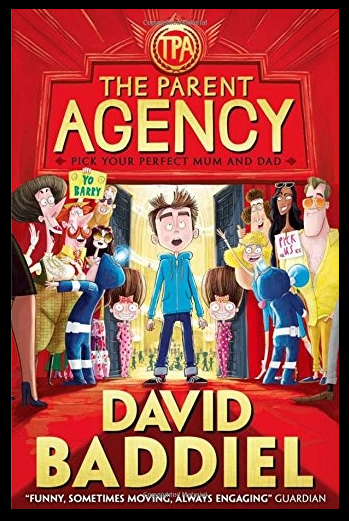
Barry hates his parents and wishes he had better ones. But far away, there’s a world where children get to choose who their parents are…


Murder Most Unladylike by Robin Stevens
(Ages 9-11)
Daisy and Hazel set up their own secret detective agency at school. It’s all quite quiet, until they find their science teacher lying dead in the gym. Will they catch the culprit before they strike again?


Holes by Louis Sachar
(Ages 10-13)
Stanley is cursed. At least that’s how he feels when he’s accused of a crime and then sent to Camp Green Lake instead of prison. Camp Green Lake is not green and there’s no lake. Each day Stanley has to dig a hole, and it feels more like prison than he could have imagined. Then, one day he finds something that changes everything…

Once by Morris Gleitzman
(Ages 11-13)
This book tells the story of Felix, a little Jewish boy living in Poland during World War 2. Felix escapes from the orphanage where he lives to try and find his parents and save them from the Nazis. If you enjoy this book there are five more books in the series.

The Knife of Never Letting Go by Patrick Ness
(Ages 13+)
The first book in this trilogy, The Knife of Never Letting Go tells the tale of Todd, the only boy left in Prentisstown, and in one month he will become a man like the rest of the town. But this is no ordinary town, as here, no thoughts are private. Todd realises secrets are being kept from him, and he’s left with no choice but to run…


Noughts and Crosses by Malorie Blackman
(Ages 13+)
Sephy is a Cross. Callum is a Nought. The dark-skinned crosses are the ruling race, whilst the white skinned Noughts are members of the underclass, who were once enslaved by the Crosses. The Noughts become increasingly frustrated with their social position, and war erupts. But amidst this a romance builds between Sephy and Callum.


Other Recommended Reads:
Rosie Revere, Engineer- Andrea Beaty (5-7)
The Thirteen Story Tree House- Andy Griffiths (6-8)
Oh The Places You’ll Go-  Dr Seuss (5-9)
Beetle Boy- M.G Leonard (8-11)
My Brother is a Superhero- David Solomans (8-11)
The Lion, the witch and the Wardrobe- C.S. Lewis (8-11)
An Eagle in the Snow- Michael Morpurgo (9-12)
Tom Gates Series- Liz Pinchon (9-12)
Ketchup Clouds- Annabel Pitcher (11-14)
One- Sarah Crossman (14+)
Broken Beautiful Things- Sara Bernard (14+)

This post was written by Lucy Taylor (IGCSE English tutor at Blackhen Education).


Friday, 23 September 2016

Miss Peregrine's Home For Peculiar Children - Creative Writing Ideas


I heard about this book a couple of weeks ago and have been fascinated with it ever since. I particularly love the use of  spooky, old photographs in the book and as a teacher, the idea of a home or school for 'peculiar' children.

So what is the book about?
A teenage boy (Jacob) travels to a remote island off the coast of Wales, where he finds the ruins of an old house; Miss Peregrine's Home For Peculiar Children. Who were these children? Why were they there? Why were they 'peculiar'?

This is the link for the offical trailer to the film and it will give you a little taste of what is to come!

https://www.youtube.com/watch?v=mAdpJw-MM-M 

I then began to think about how the book and it's wonderful photographs could be used as starting points for creative writing. In particular, writing prompts for Key Stage 3 (11-14 year olds) students.

Here are some ideas:

1) Using photographs from the book as stimuli.:


These three photographs come from the book. I won't tell you who they are, I will leave that up to you to imagine. What are their names? Why are they at Miss Peregrine's home? Why are the two younger children dressed as clowns? Where have they come from? What happens to them all?


2) Using your own photographs as stimuli:

Here are three old photographs from my own collection. I can already see a story evolving. Who are the family on the left? What has happened to them? How old is the house? Where is the house? Is it empty? Who are three girls? What are their names? Have they been to school? Or are they going to school?


3) Using the set of the house as a starting point for descriptive writing.


Imagine you have arrived at the house for the first time. What do you see? What do you hear? What do you smell? Who else is there? How do you feel?


4) Imagine you have been asked to interview Miss Peregrine. What questions would you ask her? How might she reply? Are you nervous? Is she scary?


5) Write a diary entry as if you are Jacob. Write about the first time you lay eyes on Miss Peregrine, or one of the 'peculiar' children. What time of day or night do you meet them?How do you feel? How do they react to you? Do you want to run away from them? Are they friendly?

6) Check out the offical website of the author Ransom Riggs, to find out more about him, his books and read the opening chapter from Miss Peregrine's Home For Peculiar Children.

http://www.ransomriggs.com/

All of these ideas can be done at home and will help your child with their English writing skills.

If you want to take it further, you can use one of the central themes to start a discussion or a prompt for a piece of non fiction writing.

The book has a lot of deeper messages within it, two of these being:
1) Tolerance/ tolerating people who are different.
2) Persecution / treatment of Jews during World War ( Jacob's Polish grandfather escapes the Jews during WWII).

I would love to see any of your work that comes from these ideas. It might be a piece of writing or a picture, but feel free to send it to us at: sue@blackheneducation.com

For more information about any of our online English courses, please visit our website:
www.blackheneducation.com or email me at: sue@blackheneducation.com

Tuesday, 17 May 2016

ONLINE IGCSE ENGLISH - Writing and Reading techniques.


The following reading and writing techniques that are commonly used in UK schools in preparation for GCSE & IGCSE exams. Using them will shape your writing and help towards gaining a higher grade.


Writing Devices


PAF (Purpose, Audience, Format)

This stands for:

Purpose- Why are you writing/ or the person who has written the text doing so? When you/ or they put pen to paper, what is the point? Is it to explain, describe, inform, persuade, argue or advise?


Audience- Who is the writing directed at?

Is it a formal audience? For example a Head teacher, a Prime minister, a Monarch, an Employer, a Newspaper editor etc. The tone needs to be polite and respectful.

Or is it an informal audience? The language can be friendly and appropriate to speaking to someone that you are familiar with. The letter may contain the odd slang term (but not swearing) if appropriate.


Format- How is the writing laid out on the page? 
If it is a speech, then it should have an opening address/ welcome and a closing statement. If it is a diary entry it should have a date and reflect it is a diary. If it is an advert it should have persuasive devices and message. If it is an explaining text then it should have imperatives and quite possibly be in a list.


 PALL (Purpose, Audience, Language, Lay-out)
This is the more advanced version of PAF. It is the same, apart from instead of format we say Lay-out. The extra L is for Language.


Language- What kind of descriptive language is used in the text? There could be: Alliteration, facts, onomatopoeia, repetition, rhetorical questions, exaggeration, statistics and themes (remember as AFORREST).


PEE ( Point, Evidence, Explain)


When writing an answer regarding a text you need to support your opinions with quotes from the text. You should do it like this:


Point- Make a point.

Evidence- Use a quote from the text to support the point.

Explain- Now you explain how the quote backs up the point you have made.


For example:

When answering a question about the extract ‘Touching the Void’ such as-

How does the writer’s choice of language show that he has been seriously hurt?


(Point) We know that Joe has been badly injured from his fall by the language he uses. (Evidence) ‘Then pain flooded down my thigh — a fierce burning fire coming down the inside of my thigh, seeming to ball in my groin, building and building until I cried …’. (Explanation) He has used an emotive word such as pain which lets the reader know he has been injured. He also uses a metaphor to describe the pain as ‘fire’. This image lets us know that he is in seriously injured.


 TWIST  
 This is a device used to describe and analyse poetry.


T-What is its theme?

W- What words stand out? This is the poet’s choice of vocabulary.

I- What kind of Imagery (mental pictures) have been used and how? Similes, metaphors, alliteration, personification, onomatopoeia etc?

S- What is the poem’s Structure? This could be comments on how many stanzas (verses) have been used, stand alone sentences, rhyming couplets etc.

T- What is the Tone of the poem? Is it happy and optimistic? Is it sad? Does it feel angry or humourous?


Structuring an extended response

Essay responses are where the bulk of the marks on an exam paper are.

Students need to be confident in three areas:


1. Content- What the text is about? Plot? Characters? Themes?


2. Method- How to write an extended answer (see below)


3. Timing- Be aware of the time limit and don’t run out of time.


(All of these above points will be covered in the course and practised in the final ‘revision units’ leading up to the exam in the 2nd year).


Examiners are looking for students who can lay-out their work correctly as well as answer a question. The way to structure an essay response is such:


Introduction

Create a focused opening which answers the question and may list key points that you will raise in your response.


Main body

Use PEE! You should aim to make between 3 and 5 points in your response.

For each point you should aim to include 2 pieces of evidence from the text (quotes). Typically a point, with two quotes and an explanation showing how this evidence backs up what you say, can be fitted into a paragraph.


Conclusion

This is where you finish the essay.

To create a strong conclusion you should summarise your key points and evaluate. This is where you basically comment on the writer and how they have met the point/s that the question has asked. What was their reason for doing this eg why did they show a character in a particular way or what message were they trying to get across?


Reading techniques:


When tackling a reading exercise think of the following:


Pre-scan

Read the question. Highlight key words in it. For example:

In what ways does the writer Saki create a slightly chilling atmosphere in ‘The Open Window’?


You would highlight ‘ways’, ‘create’, ‘chilling’ & ‘atmosphere’.

This is there to direct you to what the task requires.


Scan

You now read the text focused on what the question wants. Remember the key words from the pre-scan. Let your eyes run quickly over several lines, left to right. Some people find having a ruler or piece of paper under the lines help to focus on the text, a sentence at a time.

When you find what you want.

Stop.

Re-read the line again and make a note of what you have found eg descriptive word etc.

Continue to read.


Finish scanning.

Check your list.

Have you found all that you were looking for?

Now it’s time to tackle the question armed with what you have found.


This blog post was written by Andy Mackay, Head of IGCSE English at Blackhen Education.
If you would like more information about our IGCSE English courses, please feel free to contact us at: sue@blackheneducation.com