Showing posts with label english ideas for bilingual kids. Show all posts

Wednesday, 7 March 2018

Suffragette Centenary 2018


100 years ago marked an incredible change in British history. Groups of women were finally given the right to vote after years of campaigning and protesting. As the great-granddaughter of a prominent suffragette, equality is something close to my heart. Books featuring strong and fearless heroines are becoming more and more popular. But did you know that there was a time when women would publish under a male name for fear they wouldn’t be taken seriously? Thankfully, today some of our best loved authors are women and they write about bold and courageous heroines in a way that encourages girls to be proud of who they are. This month’s blog will showcase the best female writers of today that have written about strong girls                                                                

1.      Jacqueline Wilson- Opal Plumstead
Undoubtedly one of the most popular author’s today, Jacqueline Wilson is renowned for her female protagonists. Opal Plumstead tells the story of a clever, determined girl in the early 1900s who dreams of going to university. However, her father is sent to prison and she must work instead to support her family. It is whilst at work that she is introduced to Mrs Roberts, who shows her the world of the Suffragettes and the rights they fight for.


2.       Louisa May Alcott- Little Women
Little Women is a classic. Meg, Beth, Jo and Amy live with their mother and father, but when their father is sent away to war, the women are forced to gain independence and take care of themselves. The girls journey from childhood, to adulthood experiencing their fair share of troubles and fun along the way. 


3.       Malorie Blackman- The Noughts and Crosses Trilogy
Sephy is a Cross. Callum is a Nought. Crosses are the superior race and rule over the lowly Noughts who act as their servants. Sephy and Callum have been friends since birth, but in a world full of prejudice, violence and racism, their friendship struggles and the pair must overcome the rigid views of the adults to stay friends.
                                                                    

4.       Frances Hodgson Burnett- A Little Princess
Another classic, A Little Princess tells the story of Sara Crewe, who moves from India to London as a rich princess, laden in velvet and expensive clothes. But when her father dies, she is thrown into poverty. She becomes a beggar and has to do hard work just to survive. Only her imagination and the kindness from others gets her through.
                                                                          

5.       Cressida Cowell- The Emily Brown Stories
Aimed at young readers, these books follow Emily Brown, a gutsy and headstrong young girl who overcomes challenges and struggles thrown at her. My personal favourite is That Rabbit Belongs to Emily Brown, where The Queen decides to take her favourite rabbit and replace him with a beautiful brown bear. Emily is livid. She marches straight to the Queen and demands to see her rabbit. Little does she know that her rabbit isn’t quite the same as it was… 


6.       Beatrix Potter- The Tale of Kitty in Boots
Most famous for The Tale of Peter Rabbit, Beatrix Potter’s Tale of Kitty in Boots was only discovered a couple of years ago, over 100 years after it was written. Potter was a self-confessed feminist, and this story shows the strong nature of girls even though it was written at a time when women weren’t seen this way.  It tells the story of Miss Kitty who leads a daring double life defeating villains.
If you’re interested in finding out more about the Suffragettes or reading books with strong female leads, here are some suggestions of books you might find interesting: 


The following collection of books are also perfect for younger readers. The little people, big dreams series tell the stories of famous women through history who have made a difference. You’ll even find one on Emmeline Pankhurst:


This post was written by Lucy Taylor, one of our IGCSE English tutors at Blackhen Education.


Friday, 12 January 2018

Marvellous Museums


If like me and my children, you love going to museums, you're bound to have a favourite. For me it's Bowes Museum near Barnard Castle: http://thebowesmuseum.org.uk/ ,because it has such a brilliant variety of treasures from the past; everything thing from a silver swan automaton which preens itself every hour, to incredible dresses and rare works of art. My eldest daughter's favourite is The Natural History Museum: http://www.nhm.ac.uk/She will go back to it time and again and I'm sure it is because we visited when she was young and she fell in the love with it. At the time she was obsessed with dinosaurs and enjoyed putting her large collection of plastic dinosaurs on display at home. 


Which leads me on to making museums at home.
Most children love collecting and sorting, which makes creating a home-based museum a very engaging activity. These items can be anything: toy cars, shells, Lego models, anything that interests your child. Your museum could be as small as you want; just the top of a book case for an Autumn museum for example, with a temporary display of Autumn finds. 


A historically themed mini-museum, such as the Ancient Egyptians could lead to making models and artefacts.
You could begin with a visit to a local museum and discuss what is there, how it is set out, what they enjoyed finding out about. Then all you really need to make a museum at home is paper, cards and pens and a collection of items, or artefacts!
Start with deciding how to display the items; perhaps in boxes with cut outs to look into or on some shelf space that has been cleared.

Now for exhibition labels, perhaps on small folded cards, describing what the artefacts are. This is a good way to support some research, as well as practising factual writing. Encourage your child to to be precise, including the name, dates and other relevant information, rather than opinions, such as “This is the best dinosaur.”

 For example:

Tyrannosaurus Rex
T-Rex was a carnivorous dinosaur which lived in western North America
 68 to 66 million years ago.
It weighed up to 14 tons and was 12 metres long.
Fascinating fact: Tyrannosaurus Rex had the strongest bite of any animal ever discovered.

Another writing route is to create a leaflet all about their museum. Discuss what they'd need to include:  a brief description of the museum, opening times, facilities, location and so on. Leaflets are a great way to encourage paragraph writing, sub-headings and captions. A map could be included on the back. Using ICT can lead to colourful and professional looking leaflets.


Finally, your child might also like to take on the role of a museum guide, showing visitors around the exhibits and telling exciting stories about where the artefacts were found.
So as the nights draw in and the weather keeps us indoors, fashioning a museum out of treasured possessions can be a lovely way to spend a wet day. If making a museum seems a bit daunting however, you could always help your child turn their books into a library. We still have a few of the books from my husband's library he created when he was nine, all catalogued and with pockets for the lending tickets! See my previous post 'Making Books'
https://blackheneducation.blogspot.co.uk/2017/02/

Whatever your child's interests, I hope you have lots of fun creating your mini-museums. We would love to see photos of your finished museums at Blackhen too!
This post was written by Bernadette Whiteley, a KS2 & KS3 English tutor at Blackhen Education.

Friday, 2 June 2017

Summer Activities for Children


Treasure Ahoy!
Summer is the perfect time to enjoy some outside learning. Many studies have shown that it has numerous benefits for children: better health, decreased stress levels, enhanced communication skills and increased motivation, being just a few.
Treasure hunts and scavanger hunts are a great way to get children learning and exploring away from I pads and computers, either in your own garden or in a supervised outdoor space, such as woods or a park. They are also a means for children to practise reading, writing and communicating in a fun way. For all of the activities outlined below, there is the option of the adult writing and child reading or vice versa, one child writing for another child to read and with very young children, working together on both writing and reading,
Creating maps:This is perhaps the most obvious aspect of treasure hunts. Using a large piece of paper, create a map of the garden, encourage children to label important parts, e.g vegetable patch, chicken run, swings. Of course, you don't have to stick to reality; the sand pit can become quick sand and the pond a swamp filled with alligators! Your garden could be Narnia, or Arendelle, or anywhere that your child is interested in at the moment. X will mark the spot for the hidden treasure (the possibilities are endless). An alternative to using paper, is to use chalks to mark out a route and leave signs, such as “Danger”, “Go forward 10 steps”,  “Proceed at your peril” or “Welcome to Narnia”. Maps are also an excellent way to introduce the idea of keys.


Clues and codes: Setting up a treasure hunt around the garden or any space you’re familiar and comfortable with, can again be done by you or your children. The hunters are looking to uncover a succession of clues leading them ultimately to the hidden treasure. The clues can be hidden in all sorts of places and is very exciting. Whether the children write the clues or decipher them, both activities entail using creative thinking and will certainly lead to lots of discussion!


Scavanger hunts: Slightly different to treasure hunts, scavenger hunts are a race to find as many items as possible on a list, so are great if you happen to have loads of children in the garden during the summer holidays.
The site below has 10 fantastic ideas for scavenger hunts, many of them outdoors.


Another fabulous resource is the Woodland Trust, which has free spotter sheets on everything from butterflies, creepy crawlies, tracks and leaves to poo! https://www.woodlandtrust.org.uk/naturedetectives/activities/search/?activityType=100016071
I have used the Woodland Trust spotter sheets with whole classes and individual children, with great success. The children are so excited to be finding leaves, birds, flowers etc, they hardly know they are reading. If you want to involve a bit of technology, help the children to take photographs of their finds, upload and label, describe and catalogue alphabetically.
Alternativley, children can easily create their own spotter sheets for each other. A great way of doing this is encourage them to  select 10 toys (plastic dinosours, cars, teddies) write the names on a piece of paper and then place them around the garden for another child to find.
Finally, just in case we have some rainy days over the summer, treasure hunts and scavanger hunts are easily played indoors too. If you want to challenge older children, searching for adjectives, proper nouns, adverbs etc in books works well as a timed competition.


However you decide to organise your treasure or scavenger hunts, you and your children are sure to have lots of fun while reading and writing!
We would love to see your designs for your treasure maps. So why not send them to us at: sue@blackheneducation.com 
This blog post was written by Bernadette Whiteley, one of our English tutors at Blackhen Education.

Monday, 3 April 2017

Blackhen Education's Top Easter Reads


During the school holidays, you deserve to be relaxing and putting your feet up, and what better way to do that than with a good book? Research suggests that children who read regularly are more imaginative, and it is said to improve your writing skills too. However, finding a book can be tricky; there’s millions out there. So we’ve compiled a list of some recommended reads to help you pick the perfect book for you.


The Day the Crayons Quit by Drew Daywalt
(Ages 5-7)
Duncan wants to colour, but when he opens the box he finds that all his crayons have gone, and there is a note saying ‘we quit’. Will Duncan get them back?


To Wee or Not to Wee by Pamela Butchart
(Ages 6-8)
Izzy is asked to tell her friends some SUPER hilarious and scary stories. Izzy knows how funny Shakespeare was, so exaggerates some of his best stories in this funny book.

The Huge Bag of Worries by Virginia Ironside
Ages 6-8
Jenny has a lot of worries. So many worries in fact, that she has to carry them around in her big blue bag. The bag goes everywhere with her. Finally, Jenny decides they will have to go, but will anyone help her?

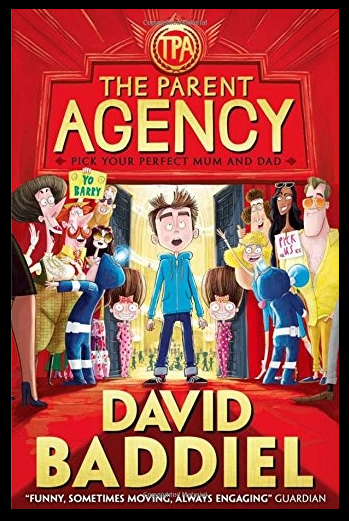
The Parent Agency by David Badiel
(Ages 9-11)
Barry hates his parents and wishes he had better ones. But far away, there’s a world where children get to choose who their parents are…


Murder Most Unladylike by Robin Stevens
(Ages 9-11)
Daisy and Hazel set up their own secret detective agency at school. It’s all quite quiet, until they find their science teacher lying dead in the gym. Will they catch the culprit before they strike again?


Holes by Louis Sachar
(Ages 10-13)
Stanley is cursed. At least that’s how he feels when he’s accused of a crime and then sent to Camp Green Lake instead of prison. Camp Green Lake is not green and there’s no lake. Each day Stanley has to dig a hole, and it feels more like prison than he could have imagined. Then, one day he finds something that changes everything…

Once by Morris Gleitzman
(Ages 11-13)
This book tells the story of Felix, a little Jewish boy living in Poland during World War 2. Felix escapes from the orphanage where he lives to try and find his parents and save them from the Nazis. If you enjoy this book there are five more books in the series.

The Knife of Never Letting Go by Patrick Ness
(Ages 13+)
The first book in this trilogy, The Knife of Never Letting Go tells the tale of Todd, the only boy left in Prentisstown, and in one month he will become a man like the rest of the town. But this is no ordinary town, as here, no thoughts are private. Todd realises secrets are being kept from him, and he’s left with no choice but to run…


Noughts and Crosses by Malorie Blackman
(Ages 13+)
Sephy is a Cross. Callum is a Nought. The dark-skinned crosses are the ruling race, whilst the white skinned Noughts are members of the underclass, who were once enslaved by the Crosses. The Noughts become increasingly frustrated with their social position, and war erupts. But amidst this a romance builds between Sephy and Callum.


Other Recommended Reads:
Rosie Revere, Engineer- Andrea Beaty (5-7)
The Thirteen Story Tree House- Andy Griffiths (6-8)
Oh The Places You’ll Go-  Dr Seuss (5-9)
Beetle Boy- M.G Leonard (8-11)
My Brother is a Superhero- David Solomans (8-11)
The Lion, the witch and the Wardrobe- C.S. Lewis (8-11)
An Eagle in the Snow- Michael Morpurgo (9-12)
Tom Gates Series- Liz Pinchon (9-12)
Ketchup Clouds- Annabel Pitcher (11-14)
One- Sarah Crossman (14+)
Broken Beautiful Things- Sara Bernard (14+)

This post was written by Lucy Taylor (IGCSE English tutor at Blackhen Education).


Friday, 24 February 2017

Making Books - Everyone Can Be an Author


World Book Day is just around the corner; one of the highlights of the school calendar for teachers and students alike. Its magic is two-fold, because we all get to indulge in dressing up (I have been The Queen of Hearts, Winnie the Witch and Professor McGonagall to name but a few). We also get to share our favourite books from home and enjoy book related activities all day long.


Writing is always more enjoyable when it has a purpose, so what better purpose than creating your own book to share with friends and family? One of my students’ favourite activities on World Book Day was making a book of their own. This was always inspired by the writing of other’s, for example, a new adventure for Winnie the Witch or creating a new character in the world of Harry Potter. It culminated in the children sharing their own newly created books at the end of the day. Because the children knew this would happen, they took extra care with their presentation and writing, as well as planning an excellent story or new chapter.
Of course there is a long history of children creating their own stories and books, the most famous being the Brontës. Their fantastical stories of the lands of Angria and Gondal were written in miniscule handwriting in tiny handmade books.

Book making really gives children ownership of their work. They are author, editor (parents can be sub-editors if required), illustrator and of course, publisher. Many children even like to put a barcode and price on the back of their books. This is also a great space for a blurb. Summarising the plot without giving away the ending is a great skill to develop.
The books don’t have to be complicated to make. The simplest is a piece of folded card, with the required number of pages folded and either glued or stabled into place. For very young children, a great place to start making their own books, is writing about themselves. Writing about their family, pets and favourite food and places really engages them. 


For many years I treasured my first handmade book, “All about Me.” I made it at the age of four, with help from my teacher, lots of yellow wool hair and two blue buttons for eyes. Today, of course, you can use the computer to produce equally thrilling results and multiple copies for grandparents, for example.
Homemade books can come in many different materials and open and close in a variety of ways. Susan Kapuscinski Gaylord, is an American teacher who is passionate about bookmaking for children. Her varied and interesting projects can be found on the link below:  


http://www.makingbooks.com/freeprojects.shtml

Homemade books can come in all shapes and sizes and be about anything! For children who prefer reading and writing non-fiction, these can fit very well with a favourite topic.  In the past, we’ve made books shaped like Viking boats, cats, Tudor houses and trains. The link below shows one example of how to create a book shaped like a house.
                                                             

Pop-up books are great fun to make too. Because they are not much more than a card, they are not daunting for younger children. The writing needs to happen before the pop-up is made, so can work as an incentive. Parents may to help with some of the more intricate designs on the link below.

So whatever your child’s interests, there is a book in them just waiting to be written. For lots more advice and ideas on helping your children to create their own books, see the link below.
Happy World Book Day!

This post was written by Bernadette Whiteley, one of our Key Stage 2 tutors at Blackhen Education.
Thursday, 12 January 2017

Blackhen Education - 2016 Review


The New Year has well and truly started. Whilst most people use this time of year to de-clutter, stash bust or turn over a new leaf, for us at Blackhen Education, it is a time to reflect and celebrate the year that has just finished.

So what did our students do in 2016?
We ran several successful competitions, starting Valentine’s Day. This is always a popular competition and the entries were lovely.


In September, students entered our Roald Dahl Day competition. As one of our best loved authors, we feel this is always an important day to celebrate.


To celebrate Christmas, students were asked to write a ghost story or design a new sledge for Father Christmas. We had a lot of fun looking at the wonderful entries and choosing our winner.


IGCSE English Exams
In May and June our IGCSE English students sat their final exams, (despite industrial action and travel disruption). And in August we received the brilliant results. Our students had achieved 100% A-C grades, including an A* and 2 A’s.


New Courses
In September, we were very excited about launching two new English courses at Blackhen Education. A Foundation English course for 4-5 year olds and Key Stage 1 (5-6 year olds) course. Both courses were written by Karen Crichton, one of our specialist English tutors at Blackhen Education.These now complete the series of 14 courses we offer for age groups 4 –16 yrs. Students can now start with us at the age of 4 and continue up to and including IGCSE. We also launched our new one year 14+ English course. After Key Stage 3 (11-14 yrs), students can now opt for 14+ English, without sitting any exams at the end.


New Tutor
In October we welcomed Bernadette Whiteley to the team, making us up to 5 tutors. Bernadette is a KS2 ( 7-11 yrs) specialist teacher and has been an invaluable addition to Blackhen Education.


Our Students
Of course we cannot finish the year without mentioning the impressive standard of work our students produced, from the youngest aged 4 through to the eldest ages 16. Considering our students complete their Blackhen work along side their French school work ( and other countries), it is truly amazing what they produce!


Our History students continued to produce excellent work. The course, now in it’s second year, covers Anglo Saxon Britain through to post war Britain.


What does 2017 hold in stall for Blackhen Education?

Competitions
New Charity to support
IGCSE English Language & English Literature exams
Monthly blogs and more……


For more information about any of our courses, visit our website at: www.blackheneducation.com or contact me at: sue@blackheneducation.com